

Views: 0 Author: Site Editor Publish Time: 2026-09-01 Origin: Site


Commercial cooling systems rely on one mechanical heart to function efficiently. The refrigeration compressors act as this central engine driving the entire thermal transfer process. Without them, large-scale temperature control remains physically impossible. However, a mismatch between compressor architecture and system load requirements creates severe operational consequences. It directly leads to inefficient energy consumption, premature mechanical failure, and costly facility downtime. While basic thermodynamic principles apply across all setups, the specific mechanical operation dictates scalability, maintenance needs, and lifecycle expenditure.
We aim to bridge the gap between mechanical engineering principles and procurement logic. You will gain a robust framework to evaluate different compressor types based on verifiable performance criteria and strict operational realities. Facility managers and technical buyers can use these insights to optimize cooling infrastructure. This ultimately ensures you select the exact equipment needed for reliable, long-term system stability.
Refrigeration compressors do not "create" cold; they facilitate a phase change by increasing the pressure and temperature of refrigerant gas, enabling heat rejection.
Selecting between a Semi-Hermetic Piston Refrigeration Compressor, a Semi-Hermetic Screw Refrigeration Compressor, or a Scroll Refrigeration Compressor depends strictly on load variability, capacity demands, and footprint constraints.
Long-term system reliability is determined not just by the compressor's spec sheet, but by integration factors like oil management, liquid slugging prevention, and compliance with low-GWP refrigerants.
Evaluating lifecycle costs requires calculating both full-load and part-load efficiencies (such as COP or IPLV) rather than focusing solely on upfront capital expenditure.
You must view the cooling process as a continuous, closed-loop cycle. Four primary components make up this loop. They include the evaporator, the compressor, the condenser, and the expansion valve. The compressor sits between the evaporator and the condenser. It pulls low-pressure gas from the evaporator. It then pushes high-pressure gas into the condenser. Without this mechanical force, refrigerant cannot flow. Heat transfer would simply stop. The compressor essentially acts as a highly specialized vapor pump. It bridges the low-pressure side and the high-pressure side of your cooling infrastructure.
The mechanical process follows a strict sequence of events. Every compressor executes this basic workflow constantly.
Suction Phase: The mechanism draws in low-pressure, low-temperature refrigerant vapor from the suction line. This vapor carries the heat absorbed from your facility.
Compression Phase: Internal mechanical parts reduce the volume of the vapor chamber. This action rapidly increases the gas pressure. It also raises the enthalpy (total heat energy) of the refrigerant.
Discharge Phase: The system forces the high-pressure, high-temperature gas out through the discharge valve. It then travels toward the condenser to reject its accumulated heat.
Engineers often use a Pressure-Enthalpy (P-h) diagram to map this process. We can easily translate this chart into tangible business outcomes. Efficient compression limits wasted mechanical energy. It directly improves the Coefficient of Performance (COP). A higher COP means your system produces more cooling per kilowatt of electricity consumed. Therefore, choosing a highly efficient compressor shrinks your monthly energy expenditures dramatically. Every minor improvement in the compression cycle yields massive financial savings over a decade of continuous operation.
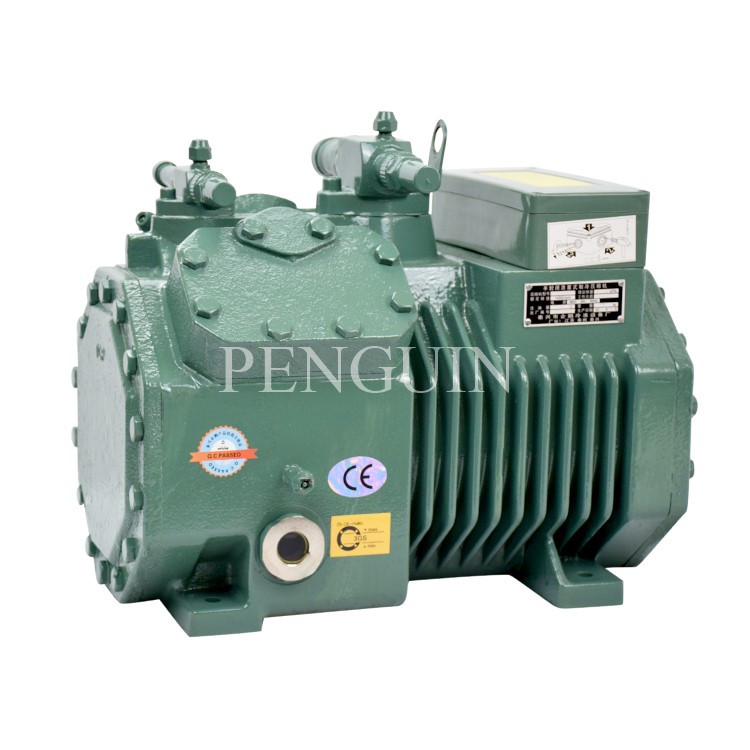
The Semi-Hermetic Piston Refrigeration Compressor remains a staple in commercial environments. It uses a familiar reciprocating mechanism. Pistons move up and down inside cylinders to compress the refrigerant gas. This design delivers excellent performance profiles. It maintains high efficiency even during fluctuating, part-load conditions.
In terms of implementation reality, this architecture offers massive maintenance advantages. Technicians can easily unbolt the casing in the field. They can repair or replace internal motors, valve plates, and piston rings directly on-site. You do not need to replace the entire unit if a single component fails. We find them best suited for applications requiring high pressure ratios and highly variable cooling loads. Grocery stores and cold storage facilities frequently rely on them.
For larger industrial applications, many facilities upgrade to a Semi-Hermetic Screw Refrigeration Compressor. This machine operates using twin interlocking helical rotors. As the rotors spin, they continuously squeeze the refrigerant gas into a smaller space.
This mechanism creates an exceptional performance profile. It provides unmatched durability under continuous, heavy-duty commercial loads. It easily handles massive volumes of refrigerant. It also operates much more smoothly than reciprocating models, producing fewer mechanical vibrations. However, implementation requires careful planning. Screw compressors demand rigorous oil management systems. Oil provides critical sealing between the rotors. It also ensures proper lubrication. If your oil separator fails, the compressor will suffer catastrophic rotor damage very quickly.
Many modern systems utilize a Scroll Refrigeration Compressor for medium-capacity needs. This design uses two interleaving scrolls. One scroll remains perfectly stationary. The other scroll orbits around it. This movement creates increasingly smaller pockets of gas, driving the pressure upward.
This architecture boasts exceptionally high volumetric efficiency. It operates with virtually 100% volumetric clearance. It also runs with significantly lower noise levels compared to piston models. Implementation realities reflect its simplicity. Fewer moving parts translate directly into high mechanical reliability. However, most scroll models in smaller sizes feature fully hermetic, welded casings. You cannot open them for field repairs. If the internal motor burns out, you must replace the entire compressor.
Table 1: Architectural Comparison of Compressor Types
Compressor Type | Primary Mechanism | Best Application | Field Repairability |
|---|---|---|---|
Piston | Reciprocating cylinders | Variable loads, high pressure ratios | High (Fully accessible) |
Screw | Twin interlocking rotors | Heavy-duty continuous industrial loads | Moderate (Requires specialized tools) |
Scroll | Orbiting and stationary scrolls | Medium-capacity, noise-sensitive areas | Low (Typically fully sealed) |
You must align compressor displacement strictly with your facility requirements. System designers calculate thermal load requirements in BTU/hr or kilowatts. If you select an undersized compressor, it will run continuously. It will never satisfy the thermostat, leading to massive wear and tear. If you choose an oversized compressor, it will short-cycle. It will turn on and off rapidly. Short-cycling destroys electrical contactors and stresses motor windings. You should match the compressor capacity closely to peak cooling demands. You must also consider future scalability. Modular rack systems allow you to add more compressors later as your facility expands.
Facilities rarely operate at peak load conditions all day. Therefore, evaluating part-load operational efficiency remains critical. You must look at metrics like the Integrated Part Load Value (IPLV). This metric accurately projects your real-world operational costs. Variable speed drive (VSD) compatibility plays a massive role here. A VSD allows the compressor motor to slow down during cooler hours. It speeds up during peak heat. This modulation saves tremendous amounts of electricity. Always verify VSD compatibility before finalizing procurement documents.
Regulatory bodies globally are phasing out high-GWP (Global Warming Potential) refrigerants. The EPA and international frameworks enforce strict phase-down schedules. You must assess compressor compatibility with transitional and long-term refrigerants. Natural refrigerants like CO2 and A2L classified alternatives dominate new designs. Choosing a compressor restricted to legacy refrigerants creates a stranded asset. You will face exorbitant costs procuring phased-out gases for future maintenance. Ensure your chosen architecture explicitly supports modern, environmentally compliant refrigerant blends.
Compressors are designed exclusively to pump vapor. They cannot compress liquid. When unevaporated liquid refrigerant enters the suction valve, liquid slugging occurs. This violent hydraulic shock shatters internal valves and destroys pistons. Furthermore, excess liquid washes essential lubricating oil away from bearing surfaces.
Best Practices for Prevention:
Install properly sized suction accumulators to catch stray liquid before it enters the casing.
Utilize crankcase heaters to boil off dissolved refrigerant in the oil reservoir during off-cycles.
Maintain precise control over expansion valve superheat settings.
System contamination represents a leading cause of premature failure. Improper system vacuuming leaves ambient air and moisture inside the copper lines. Moisture reacts under high heat to form highly corrosive acids. Blocked condensers also cause discharge temperatures to spike dangerously high.
Common Mistakes to Avoid:
Skipping micron gauge readings during initial commissioning.
Ignoring dirty condenser coils for multiple maintenance cycles.
These oversights inevitably lead to extreme thermal overload. The internal heat burns the protective insulation off the motor windings. A catastrophic electrical short follows, completely destroying the unit.
Retrofitting a new compressor into an aging refrigeration loop presents unique challenges. You cannot simply drop a modern unit into a thirty-year-old piping network. Old mineral oil residues might clash violently with modern synthetic lubricants. Commissioning a completely new system build offers a clean slate. However, it requires a massive initial capital outlay. If you choose to retrofit, technicians must flush the entire piping system thoroughly. They must also upgrade aging contactors and expansion valves to match the new compressor's operational dynamics.
Before requesting bids, you must define what constitutes a successful installation. Different facilities prioritize different outcomes. A pharmaceutical cold-storage warehouse prioritizes maximizing uptime above all else. A smaller retail outlet might prioritize minimizing initial capital expenditure. Large commercial data centers typically target strict energy efficiency goals to reduce utility bills. You must rank these three priorities clearly. Your ranking dictates which architecture makes the most logical sense.
Do not rely on guesswork or historical replacement data. Advise your engineering stakeholders to audit current thermal loads rigorously. Facility dynamics change over time. You must also review your facility electrical infrastructure limits. A new high-capacity unit might require larger electrical breakers. Finally, consult directly with application engineers. Discuss your specific operational nuances before requesting official manufacturer bids. Clear data prevents costly procurement errors.
Understanding the mechanical differences in compressor design remains foundational. It allows you to make sound capital investments in your facility cooling infrastructure. The internal mechanisms directly dictate how a unit handles fluctuating temperatures and continuous operational strain.
The optimal choice always balances thermodynamic capability with site-specific realities. You must weigh maintenance resources against regulatory compliance. A highly efficient unit provides no value if your local technicians lack the tools to service it properly.
We strongly recommend a proactive approach. Engage with certified HVAC-R engineering consultants early in your planning phase. Have them run exact thermal load calculations. Ask them to build comprehensive lifecycle expenditure models. This diligent approach ensures years of reliable, uninterrupted cooling performance.
A: No. The compressor does not create cold air directly. It merely creates the necessary pressure differential within the closed system. This mechanical action allows the refrigerant to circulate, absorb heat at the evaporator, and reject that heat at the condenser.
A: Semi-hermetic designs allow technicians to unbolt the casing. They can repair or rebuild internal components like valves and motors directly on-site. This approach proves far more cost-effective for large-scale systems than replacing the entire unit every time a minor failure occurs.
A: A VFD modulates the compressor speed to match the exact cooling load required. This modulation prevents destructive short-cycling. By eliminating frequent hard starts and stops, it significantly reduces mechanical wear and lowers severe electrical energy spikes.


