

Views: 0 Author: Site Editor Publish Time: 2026-09-08 Origin: Site


The stakes are incredibly high in modern industrial cooling environments. A facility's central cooling engine dictates overall operational reliability and consumes the vast majority of daily energy. For this reason, procuring reliable refrigeration compressors remains a critical, high-stakes decision for any business.
Unfortunately, many facility managers still rely solely on baseline capacity metrics when selecting new units. This standard approach completely ignores complex operational realities. Peak thermal loads, shifting regulatory frameworks, and heavy maintenance footprints frequently catch operators off guard. Without addressing these underlying factors, businesses risk sudden equipment failure, ruined perishable inventory, and soaring utility bills.
This guide provides a transparent, vendor-neutral framework to evaluate your next cooling system. You will learn how to match specific architectures to your exact thermal load profile. We will help you shortlist the perfect solution, prioritize lifetime efficiency, and ensure future-proof facility viability.
Compressor architecture must match the load profile: Sizing isn't just about peak capacity; over-sizing leads to short-cycling, while under-sizing causes catastrophic product loss.
Refrigerant regulations dictate hardware lifespan: Selecting equipment without a clear low-GWP (Global Warming Potential) or natural refrigerant strategy risks early obsolescence.
Implementation realities drive TCO: Upfront equipment costs often pale in comparison to lifetime energy draw, maintenance downtime, and integration complexities.
Shortlisting requires system-level thinking: A compressor cannot be evaluated in a vacuum; it must align with the evaporator, condenser, and specific cold room design.
The primary operational bottleneck in cold storage is simple to understand but difficult to master. Facilities must balance rigid temperature stability against daily energy efficiency. When product temperatures fluctuate, valuable inventory perishes rapidly. Conversely, when systems run relentlessly without optimization, power bills quickly destroy profit margins.
To measure true operational success, operators rely on specific Key Performance Indicators (KPIs). You should evaluate any potential equipment upgrade against these core metrics.
Energy Efficiency Ratio (EER) and Coefficient of Performance (COP): These numbers indicate true cooling efficiency. You must evaluate performance across partial loads and full loads, rather than just relying on peak design conditions.
Temperature Pull-Down Speed: This metric reveals how quickly your system recovers lost temperatures. Frequent door openings and fresh product loading introduce massive heat spikes. Fast thermal recovery prevents catastrophic spoilage.
Downtime Risk Profile: You must quantify the exact financial cost of equipment failure. Calculate this figure per hour based on your stored inventory value. Minor mechanical failures can easily ruin millions of dollars in sensitive goods.
Many buyers make a critical error during the initial procurement phase. They focus entirely on the initial capital expenditure (CapEx) of the equipment. This short-sighted approach inevitably leads to inflated operational expenditures (OpEx) within the first 24 months of deployment.
Cheap equipment routinely consumes far more power over its lifecycle. It also requires much more frequent maintenance interventions and fails earlier. Over a standard ten-year lifecycle, cumulative energy draw and maintenance downtime heavily outweigh the initial purchase price. You must frame this investment around lifetime operational efficiency rather than upfront discounts.
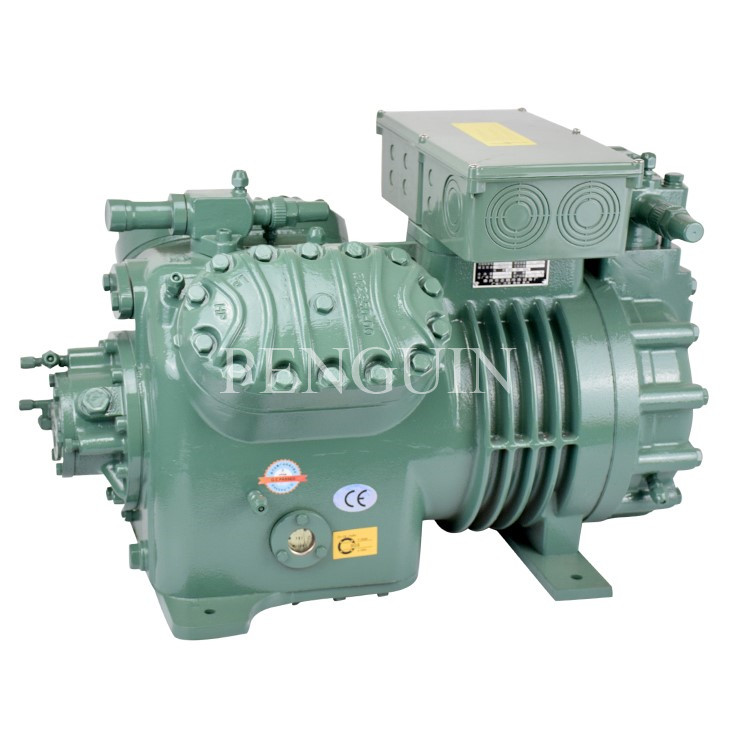
Different hardware architectures serve highly specific cold storage environments. We must avoid generic definitions and focus on practical commercial advantages. Selecting the wrong underlying technology guarantees poor performance.
Scroll units utilize two inter-locking spiral scrolls to compress refrigerant gas. They feature minimal moving parts, making them highly efficient under the right conditions.
Best for: Small to medium walk-in coolers, retail display cases, and standard commercial refrigeration environments.
Decision criteria: They offer excellent efficiency at specific design conditions and generate very little noise. However, they suffer from limited repairability. When internal components fail, technicians usually must replace the entire unit rather than rebuild it.
Reciprocating units use a piston and cylinder mechanism driven by a crankshaft. This traditional design remains a staple in heavy industrial applications for very good reasons.
Best for: Blast freezers, deep-freeze environments, and heavy-duty commercial processing facilities.
Decision criteria: A heavy-duty Low Temperature Reciprocating Compressor demonstrates an exceptional ability to handle high compression ratios. These ratios are absolutely mandatory for sub-zero environments. Furthermore, they are highly serviceable on-site. Technicians can easily replace worn pistons, rods, and valve plates directly on the factory floor.
Screw units trap and compress gas between two massive, rotating helical rotors. They are built specifically for unrelenting, high-capacity demands.
Best for: Large-scale industrial cold storage, central refrigeration plants, and massive distribution centers with continuous heavy loads.
Decision criteria: They provide superior capacity control, especially when paired with variable speed drives. They also offer exceptional longevity under continuous operation. However, they require extremely high initial CapEx and demand highly specialized maintenance routines.
Compressor Architecture Comparison
Architecture | Ideal Application | Maintenance Profile | Upfront Cost |
|---|---|---|---|
Scroll | Small Walk-ins / Retail | Replace-only upon failure | Low |
Reciprocating | Blast Freezers / Deep Freeze | Highly serviceable on-site | Medium |
Screw | Large Industrial / Central Plants | Requires specialized facilities | High |
You must translate technical specifications into tangible operational security. Evaluating a new unit requires mapping hardware features directly to your facility's daily challenges.
Theoretical heat load calculations often fail in real-world environments. Consulting engineers might calculate a baseline heat load of 100 kW. However, practical realities tell a different story. Frequent forklift traffic, poor dock door seals, and changing ambient warehouse temperatures introduce massive thermal spikes.
You must demand verifiable performance curves from manufacturers. Ensure they test the equipment under your specific local ambient temperatures. A robust Cold Room Refrigeration Compressor must possess the mechanical headroom to handle seasonal ambient temperature surges without failing.
Variable Frequency Drives (VFD) offer incredible energy savings on paper. By altering the motor's electrical frequency, the unit ramps up or down to precisely match cooling demands. However, you must assess if these savings justify the added electrical complexity.
If your cold storage space experiences highly fluctuating loads, inverter technology is immensely beneficial. Conversely, if your facility runs at a constant 100% capacity around the clock, a VFD offers zero energy savings. It merely introduces a new, expensive point of electrical failure.
Global industry regulations are shifting rapidly. Regulatory bodies strictly limit the use of high-GWP legacy refrigerants like R-404A. Facilities must aggressively navigate the transition toward mildly flammable A2L blends, CO2 (R-744), or Ammonia (R-717).
You need strong future-proofing strategies today. Ensure your newly selected Cold Storage Refrigeration Compressor carries full manufacturer certification for modern low-GWP refrigerants. This proactive step helps you avoid forced, highly expensive chemical retrofits in the coming decade.
Procuring the perfect equipment on paper means nothing if you cannot successfully deploy it. Experienced engineers know that implementation hurdles heavily impact project timelines.
Physical space constraints often dictate final equipment choices. Large industrial units require significant footprint allocations inside plant rooms. You must also consider mandatory noise and vibration dampening requirements. Heavy machinery easily transfers destructive vibrations into building structures. We recommend installing specialized spring isolators and pouring heavy concrete pads to mitigate structural damage. Furthermore, larger multi-stage units often require substantial electrical infrastructure upgrades before installation.
Current industrial markets face significant logistical delays. You must factor long lead times into your immediate project timeline. Heavy commercial units sometimes take several months to arrive from overseas manufacturing hubs. Always ensure your local service vendors stock specific OEM spare parts to prevent prolonged outages.
A new unit must communicate flawlessly with your current infrastructure. Verify seamless integration alongside your existing PLC or SCADA control systems. Communication protocols must align perfectly. You must also ensure your legacy oil management infrastructure fully supports the new hardware specifications. Mixing incompatible synthetic and mineral oils ruins internal seals rapidly.
Technicians require adequate physical space to work safely. Always evaluate the exact physical clearance required for an engineer to rebuild or service a unit in situ. Cramped installations inevitably lead to neglected maintenance routines. Neglected equipment fails much faster.
Developing a vendor-agnostic decision matrix is absolutely critical. We highly recommend a strict four-step filtering process to ensure optimal results.
Define your non-negotiables: Document your exact required capacity in kW or BTU. Establish your required target temperature range immediately. Finally, list all mandatory refrigerant compliance standards based on local environmental laws.
Filter by application: Select an architecture matching your facility's physical scale. Decide between Scroll, Reciprocating, or Screw architectures based strictly on your daily duty cycle and anticipated maintenance capabilities.
Evaluate 10-year operational costs: Do not rely on generic standard testing conditions. Demand annualized energy consumption estimates from your short-listed vendors. Ask manufacturers to base these critical calculations on your specific local climate data.
Assess regional aftermarket support: Mechanical equipment will eventually require emergency service. Shortlist vendors based heavily on local technician availability. Ensure certified repair experts and replacement parts exist within a 50-mile radius of your facility.
Next-step action: Compile your comprehensive heat load calculations today. Consult an independent, certified refrigeration engineer. Have them run dynamic software simulations of your facility before you issue any final procurement RFP.
Selecting the best cooling equipment requires looking far past the basic specification sheet. We have explored how hardware interacts intimately with facility traffic, local climates, and incoming regulatory horizons. A truly successful deployment demands rigorous system-level thinking.
You must map specific architectural strengths directly to your thermal load profile. Whether you choose a highly serviceable reciprocating unit for deep freezing or a robust screw unit for central operations, your focus must remain on lifecycle efficiency. Do not let upfront capital savings blind you to massive future operational expenses.
We encourage all buyers to challenge manufacturer efficiency claims directly. Always request detailed, real-world case studies demonstrating similar facility deployments. Ask for documented proof of performance under extreme environmental stress. Taking these proactive, analytical steps ensures your investment delivers lasting operational efficiency and true reliability.
A: Lifespans vary heavily based on architecture and maintenance quality. Standard scroll models typically last 10 to 15 years before requiring full replacement. Heavy-duty reciprocating and screw models boast much longer lifecycles. They can easily exceed 20 years of continuous service. Achieving this longevity requires adhering strictly to scheduled oil changes and proper rebuild intervals.
A: Oversized equipment presents distinct operational symptoms. The most common sign is frequent short-cycling, where the unit turns on and off rapidly. This erratic behavior leads to very poor humidity control inside the space. You will also notice premature wear on electrical contactors and higher than expected energy spikes during startup phases.
A: In some cases, yes. Several manufacturers offer drop-in replacement blends for legacy systems. However, this approach carries notable risks. Operators frequently experience measurable capacity drops after retrofitting. Furthermore, new chemical blends can cause significant internal seal degradation. We highly recommend consulting a certified technician to assess your specific hardware compatibility before proceeding.
A: Blast freezers demand extremely low evaporating temperatures. This environment requires exceptionally high compression ratios to function correctly. Reciprocating architectures maintain superior volumetric efficiency under these harsh conditions. They effectively handle the intense mechanical stress of deep-freeze applications. Their robust internal valve designs also make them highly resilient against dangerous liquid slugging during rapid temperature pull-downs.


