

Views: 0 Author: Site Editor Publish Time: 2026-08-07 Origin: Site


Procuring industrial compressors carries immense stakes for your facility. Make the wrong technology choice, and your daily operations suffer instantly. You face unexpected production bottlenecks across the entire assembly line. You risk paying excessive energy bills every single month. Premature equipment failure often follows poor initial selection. We must examine the fundamental engineering divide to avoid these costly pitfalls. The industrial market splits distinctly between reciprocating piston motion and rotary screw mechanics. These two internal designs operate entirely differently under pressure. Deciding which machine performs better relies heavily on your specific application. You cannot simply compare basic spec sheets online. You must evaluate your facility’s daily duty cycle thoroughly. Demand consistency plays a massive role in long-term performance. You also need a comprehensive lifecycle budget. This guide will clarify the core technical differences. You will learn how to match heavy equipment accurately to your unique workflow.
Duty Cycle is the Deciding Factor: Piston compressors are built for intermittent demand (typically 60-70% duty cycles), while screw compressors are designed for 100% continuous, 24/7 operation.
CapEx vs. OpEx: Piston units have a lower initial purchase price, but screw compressors offer significantly lower energy and maintenance costs at scale.
Application Specificity: Standard pneumatic tools often rely on piston systems, whereas large manufacturing floors and industrial refrigeration require the stability of rotary screw technology.
Footprint & Environment: Screw compressors operate quietly and with minimal vibration, allowing them to be placed closer to the point of use compared to loud, vibration-heavy piston machines.
Facilities often rush into equipment purchases prematurely. You must evaluate facility airflow requirements first. Measure your cubic feet per minute (CFM) carefully during peak hours. For specialized cooling applications, determine your exact thermal load accurately. Do this before you look at basic machine specifications. Oversizing either technology leads to massive electrical waste daily. Undersizing causes systemic pressure drops and rapid internal component wear. You need a highly accurate baseline.
Consider the intermittent demand profile first. Many auto body shops and light assembly floors experience highly fluctuating air demands. Operators use pneumatic tools sporadically throughout the day. Stop-and-start usage fits perfectly for standard piston compressors. These rugged machines build pressure quickly inside their receiver tanks and shut off. Reciprocating pumps absolutely require adequate cool-down periods between cycles. Running them constantly overheats the delicate internal valve plates. Standard duty cycles hover strictly around 60 to 70 percent. Give them ample time to rest and dissipate heat.
Conversely, many heavy industries require a continuous demand profile. Large manufacturing plants consume massive air volumes nonstop. Here, screw compressors thrive under constant, unyielding load. They deliver a steady, uninterrupted flow of compressed gas to the factory floor. However, you must avoid "short-cycling" a rotary machine. Running it briefly—for less than 10 minutes at a time—prevents proper internal heating. The lubricating oil never reaches optimal operating temperature. This operational mistake causes severe condensation build-up inside the sensitive airend. Moisture then degrades the expensive synthetic oil rapidly, destroying internal bearings.
Reciprocating mechanics rely on highly familiar internal combustion principles. A powerful electric motor drives a heavy steel crankshaft. The rotating crankshaft moves connecting rods up and down rapidly. Pistons compress incoming air inside bored cylinders using specialized intake and exhaust valves. This intense mechanical action generates substantial kinetic heat. High internal friction creates much higher operating temperatures natively. Therefore, maintenance teams face constant implementation risks daily. You must monitor piston rings diligently to prevent blow-by. Valve plates require frequent visual inspection for carbon buildup and mechanical wear.
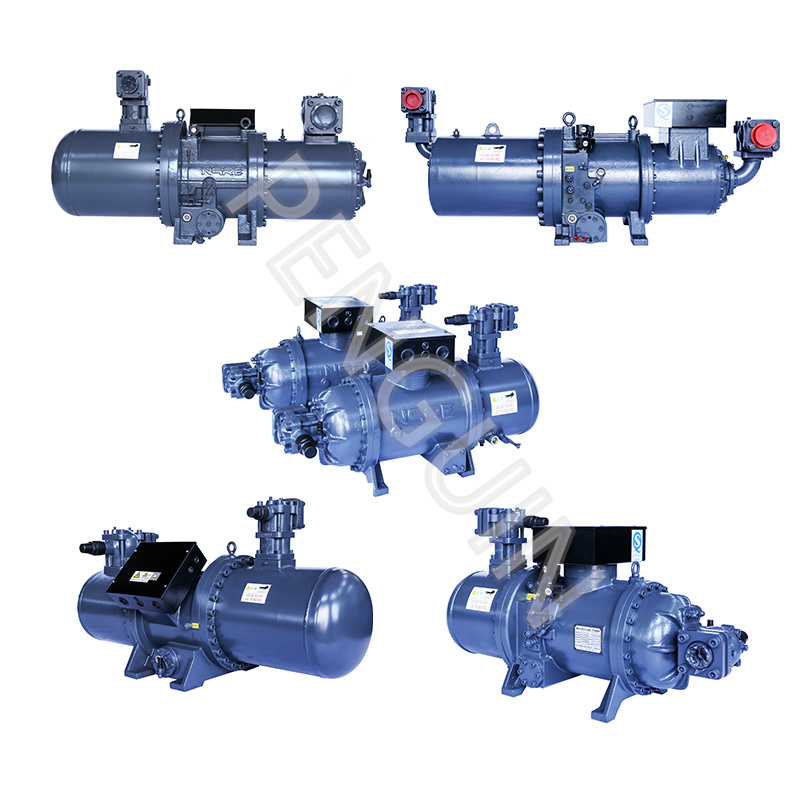
Rotary mechanics utilize a completely different physical compression process. The heavily cast airend contains two intermeshing twin rotors. These asymmetrical helical screws turn toward each other constantly at high speeds. Injected oil seals the microscopic gaps between the spinning rotors perfectly. This fluid-sealed compression process pushes trapped air smoothly forward without pulsation. Fewer moving parts mean much less daily mechanical wear. You rarely see fragile valves or rings breaking down in these systems.
However, you must acknowledge the specific reliability reality surrounding rotary equipment. Catastrophic rotor failure remains exceedingly rare but highly destructive. Replacing an entirely damaged helical airend is very expensive. Rebuilding a standard reciprocating unit costs much less by comparison. You must weigh these mechanical risks against your available maintenance budget.
Monitor reciprocating pump oil levels daily to prevent catastrophic rod failure.
Inspect rotary machine intake filters weekly to prevent costly rotor scoring.
Maintain proper ambient room temperatures year-round to protect sensitive electronics.
Check drive belts monthly on older reciprocating models to prevent power loss.
Financial planning requires looking far beyond the initial vendor invoice. Initial Capital Expenditure (CapEx) heavily favors older reciprocating technology. You experience a significantly lower financial barrier to entry when purchasing these models. Small businesses appreciate this minimal upfront investment. A startup facility can acquire substantial pneumatic power without draining limited capital reserves.
However, Operating Expenditure (OpEx) tells a completely different financial story over time. Energy efficiency drives long-term facility profitability. We often compare strict CFM-per-horsepower efficiency metrics during procurement. Rotary units deliver significantly more usable air per unit of electrical energy during continuous operation. Modern rotary systems also integrate Variable Speed Drive (VSD) technology natively. VSD capabilities allow the internal motor to speed up or slow down automatically. The machine matches your actual facility demand perfectly in real time. This precise matching curbs tremendous amounts of electrical energy waste.
Maintenance timelines also differ drastically between the two engineering designs. Reciprocating setups demand high-frequency, low-cost manual interventions. You perform frequent manual oil top-offs. Technicians handle routine valve replacements easily using standard hand tools. Belt tensioning occurs monthly to prevent unwanted slipping and efficiency drops.
Rotary designs follow a strictly different maintenance schedule entirely. You rely on precisely scheduled synthetic fluid changes and air-oil separator filter replacements. They typically boast a much lower overall maintenance frequency. However, servicing them correctly requires highly specialized technicians. You cannot typically repair a damaged rotary airend using standard facility maintenance staff.
Metric | Reciprocating (Piston) | Rotary (Screw) |
|---|---|---|
Duty Cycle Limit | 60% - 70% | 100% Continuous |
Initial CapEx | Low | High |
Energy Efficiency (Continuous) | Moderate | Excellent |
Maintenance Style | Frequent, Low Cost | Infrequent, Specialized |
Noise Levels | 80 - 85+ dB | 65 - 75 dB |
Industrial cooling requires shifting our operational lens away from standard compressed air. We must focus heavily on complex thermal management and hazardous refrigerant gases. Systems utilize ammonia, freon, or CO2 to move heat out of critical spaces. Procuring dedicated refrigeration compressors involves highly specific pressure and safety requirements. Different refrigerants react differently under intense mechanical compression.
You must know exactly when to deploy reciprocating designs for cooling. Small commercial setups handle fluctuating thermal loads beautifully using them. Multi-stage blast freezing often requires rapid, extreme pressure changes. In these demanding scenarios, a heavy-duty piston refrigeration compressor excels tremendously. They manage very high pressure ratios easily across different cylinder stages. Specialized low-temperature chemical processes depend heavily on their rugged staging capabilities. They tolerate difficult operating environments remarkably well.
Massive cooling operations require entirely different engineering approaches. Scaling up mandates advanced rotary technology exclusively. Large-scale food processing plants need completely stable, unyielding temperatures. Cold chain logistics hubs operate 24/7 without a single exception. Massive storage facilities demand a dedicated refrigeration screw compressor cooling unit for cold room applications.
These large units manage steady thermal loads flawlessly over many years. You benefit from massive volumetric efficiency across the entire industrial refrigeration cycle. Their legendary longevity in continuous industrial freezing remains completely unmatched. You rarely experience sudden, disastrous temperature drops during critical processing shifts. They form the absolute backbone of the modern global cold chain.
Equipment placement dictates operational comfort and strict OSHA compliance. Noise and vibration constraints often force difficult facility layout decisions. Reciprocating units generate immense physical shaking during operation. They routinely exceed 80 to 85 decibels during heavy load cycles. You cannot place them safely near active workers. They require heavily reinforced mounting pads and thick vibration isolation mounts. Most facilities build dedicated, sound-proofed utility rooms just for them. This isolation adds construction costs to your initial budget.
Rotary machines provide a much calmer physical footprint overall. Manufacturers house them inside advanced sound-attenuating sheet metal enclosures. They typically run at a highly manageable 65 to 75 decibels. They produce almost zero floor vibration during intense compression cycles. You can install them directly on the active production floor safely. This physical proximity reduces expensive, complex pipe routing across your entire factory.
Air and gas quality also matters greatly for end-product integrity. We must discuss differing internal oil carryover risks. Both technologies offer strictly oil-free variants for medical or strict food uses. However, standard oil-injected models dominate general manufacturing industry. Rotary units generally provide much cleaner baseline output natively. Their advanced multi-stage separation vessels strip oil aerosols effectively before discharge. Reciprocating models often pass more aerosolized oil downstream as their piston rings slowly wear out over time.
Placing cooling intake vents directly near hot factory exhaust sources.
Failing to anchor heavy reciprocating pumps directly to thick concrete floors.
Ignoring ambient seasonal humidity levels around the primary equipment.
Using undersized distribution piping downstream from the main receiver tank.
You need a highly structured method to finalize your procurement decision. Use this clear framework to narrow your available options logically. Skipping these steps leads to expensive buyer's remorse.
Step 1: Audit Current Demand. You must measure the actual CFM or cooling tonnage required accurately. Track your absolute peak usage alongside your average daily baseline draw. Do not guess these vital engineering numbers.
Step 2: Determine Run Time. Calculate the exact hours the machine operates daily. If the unit runs more than 70 percent of an active shift, eliminate reciprocating options immediately. They will overheat and fail prematurely under those brutal conditions.
Step 3: Calculate 5-Year Lifecycle Costs. Do not look only at the attractive sticker price. Factor in the initial vendor purchase price first. Add five full years of projected local electricity consumption rates. Then include the projected cost of mandatory preventive maintenance contracts over that exact span.
Step 4: Consult Integration Experts. Bring in professional mechanical engineers before buying anything. Ensure your existing electrical infrastructure can handle the massive starting amps. Verify the surrounding room ventilation can exhaust the generated mechanical heat effectively.
Our final decision matrix relies entirely on hard operational data over lazy general assumptions. Reciprocating machines serve as highly cost-effective workhorses for intermittent, fluctuating daily loads. They handle heavy-duty stops and sudden starts without major mechanical issue. Rotary machines form the necessary engineering foundation for continuous, high-volume production. They handle massive, large-scale cooling requirements effortlessly across multiple continuous shifts.
Selecting between them dictates your future energy and maintenance bills directly. Do not let cheap upfront pricing dictate your final corporate choice. Analyze your specific facility duty cycle meticulously. Prioritize long-term energy efficiency over short-term capital savings.
We strongly encourage you to take definitive action today. Schedule a professional air or thermal demand audit for your facility immediately. Gather hard, undeniable data on your true operational needs before initiating any formal RFP process.
A: Not necessarily. Horsepower does not equal CFM or cooling capacity directly. Sizing must be recalculated strictly based on actual volumetric flow requirements. Different mechanical designs produce entirely different output volumes per unit of horsepower. You risk severe undersizing if you merely match the motor size.
A: Precision machining of the asymmetrical helical rotors drives up manufacturing costs significantly. The mandatory integration of advanced internal cooling circuits, complex oil separation tanks, and heavy sound-attenuating metal enclosures adds further material expense to the final price tag.
A: No. While vastly superior for large, continuous cold storage facilities, a piston refrigeration compressor remains better suited for smaller commercial systems. Specific low-temperature processing applications requiring extreme pressure differentials also strongly favor rugged reciprocating setups.
A: With strict adherence to professional maintenance schedules, industrial piston units can easily last 10 to 15 years, usually requiring periodic valve and ring rebuilds. Well-maintained screw air ends often exceed 40,000 to 60,000 total operating hours before ever requiring a major factory overhaul.


