

Views: 0 Author: Site Editor Publish Time: 2026-07-31 Origin: Site


Industrial and commercial facilities require highly reliable compressed air or gas to function. However, buyers often struggle during the equipment procurement phase. Over-specifying your machinery leads to wasted floor space and idle capacity. Conversely, under-specifying causes immediate operational bottlenecks. Standard piston compressors remain undisputed industry workhorses today. They deliver exceptional power for many scenarios. Still, they are not universally applicable. Their true suitability depends entirely on your required duty cycle, peak pressure needs, and environmental compliance rules. We designed this comprehensive article to provide a clear, evidence-based framework. You will discover exactly how to evaluate if these machines fit your specific facility. We explore the mechanical constraints, layout the primary applications, and highlight key implementation risks. By following these guidelines, you can ensure a reliable mechanical fit for your daily operations.
Piston compressors are optimized for intermittent, high-pressure applications rather than continuous, 24/7 continuous air demand.
They remain the standard for specific commercial niches, including heavy-duty automotive, specialized manufacturing, and commercial refrigeration.
Choosing between single-stage, two-stage, oil-lubricated, or oil-free models directly impacts upfront costs, compliance, and ongoing maintenance schedules.
Understanding the mechanical duty cycle limits is the most critical factor in preventing premature equipment failure.
You must grasp the underlying mechanics to properly apply these machines. The core mechanism relies on simple reciprocating motion. A central crankshaft connects to an internal rod. This rod attaches directly to a cylindrical head. As the motor turns the crankshaft, it forces the rod up and down. This movement drives the cylinder head inside a sealed chamber. A specialized valve system regulates the flow of incoming and outgoing gases.
We can break this mechanical cycle down into three distinct strokes:
The Intake Stroke: The internal component moves downward. This action creates a sudden vacuum inside the chamber. The pressure drop forces the intake valve open. Ambient air or gas rushes into the empty cylinder.
The Compression Stroke: The internal component reverses direction and travels upward. The intake valve snaps completely shut. The trapped air or gas has nowhere to escape. The shrinking volume forces the pressure levels to spike rapidly.
The Discharge Stroke: The internal pressure eventually exceeds the resistance of the discharge valve. This valve pops open. The highly pressurized air or gas pushes out into the external storage tank or piping network.
You might wonder why these steps dictate real-world applications. The piston compressor working principle inherently generates massive amounts of friction. This rapid mechanical action produces intense heat inside the chamber. Therefore, the machine requires dedicated resting periods to dissipate this thermal energy. You cannot operate these standard units continuously. They typically feature a strict 50% to 70% duty cycle. Ignoring this fundamental mechanical reality guarantees premature failure.
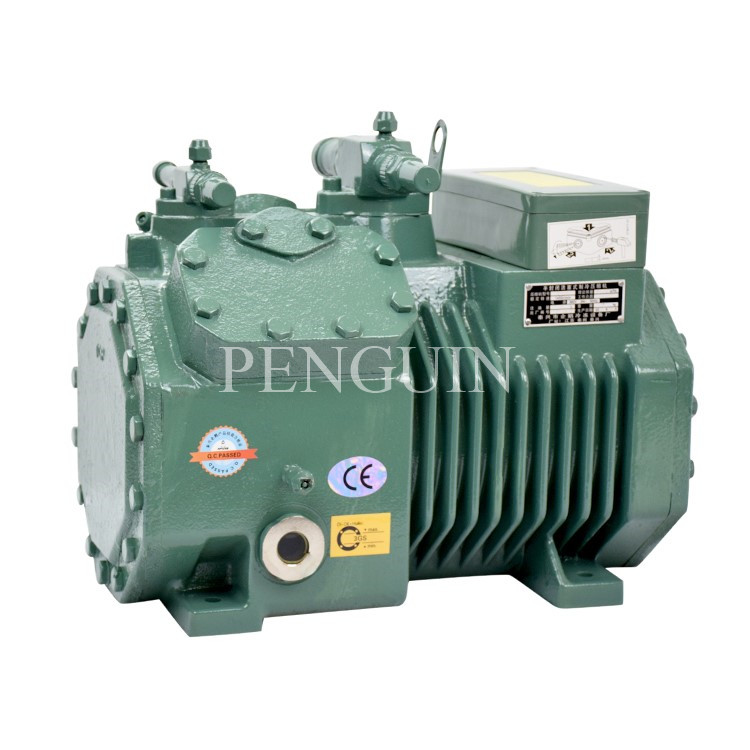
These machines dominate several specific industrial sectors. They excel wherever demand fluctuates heavily throughout the day. Facilities with intermittent air demands rely on them daily.
Many manufacturing environments experience sharp peaks and deep valleys in their air usage. Automotive repair shops provide a perfect example. Mechanics use pneumatic impact wrenches for short, intense bursts. They do not run these tools constantly. Metal fabrication shops use air for plasma cutting and grinding in similar patterns. A reciprocating unit handles these varied loads perfectly. It builds up pressure in a large receiver tank. The tank supplies the immediate air bursts. The machine then shuts off and cools down while the mechanics work.
The cooling industry depends heavily on this technology. A piston compressor for cold storage manages massive thermal loads efficiently. Warehouses holding perishable goods face constantly changing temperatures. Doors open and close. New warm inventory arrives. The cooling system must adapt rapidly. A piston refrigeration compressor for cold room applications thrives here. It compresses volatile refrigerant gases instead of standard air. These specific machines offer excellent capacity control. They handle the dense, variable mass flows of modern refrigerants flawlessly.
Certain manufacturing processes require extreme pressure outputs. Standard rotary machinery struggles to push beyond 150 PSI efficiently. However, the plastics industry needs massive force. PET bottle blowing operations often require 500 PSI or more. Multi-stage reciprocating units deliver these extreme pressures. They step the pressure up through successive, progressively smaller cylinders. They represent the only viable mechanical option for many extreme-pressure industrial applications.
You will face several technical choices when specifying this equipment. Manufacturers build different configurations to handle specific operational challenges. You must match the physical design to your environmental requirements.
Single-stage units complete the compression cycle in one single stroke. They take ambient air and push it directly to its final pressure. You should select these models for standard utility needs. They generally max out around 135 PSI. They feature a simpler mechanical footprint.
Two-stage units add an extra step. They compress the air once, then send it through a cooling tube. We call this tube an intercooler. The cooled air then enters a second, smaller cylinder for another round of compression. You need this configuration for high-pressure requirements reaching 175 PSI or higher. The intercooling process drastically improves thermal efficiency. It prevents the internal components from overheating under extreme loads.
Oil-lubricated machines flood the internal crankcase with heavy oil. This fluid coats the moving parts. It reduces friction and helps seal the internal gaps. Heavy industries prefer lubricated models because they offer superior durability. They can withstand harsh, dirty environments effectively.
Oil-free machines utilize specialized Teflon-coated internal rings. They feature permanently sealed bearings. They do not introduce any liquid lubrication into the compression chamber. You must specify oil-free units for compliance-heavy environments. Food packaging, beverage processing, medical facilities, and electronics manufacturing strictly prohibit oil carryover. Even microscopic oil vapor can ruin an entire production batch.
Compressor Configuration Comparison Matrix
Configuration Type | Pressure Limit (Approx.) | Primary Advantage | Best Used For |
|---|---|---|---|
Single-Stage Lubricated | Up to 135 PSI | Simpler mechanical footprint | Auto shops, light fabrication |
Two-Stage Lubricated | 175+ PSI | High thermal efficiency | Heavy manufacturing, blow molding |
Single-Stage Oil-Free | Up to 135 PSI | Zero contamination risk | Dental clinics, small food packaging |
Two-Stage Oil-Free | 175+ PSI | Extreme purity under load | Medical gas, sensitive electronics |
You should constantly compare reciprocating units against rotary screw alternatives. The decision usually hinges on a few distinct operational realities. Understanding these differences prevents major procurement mistakes.
We must emphasize the duty cycle difference again. It remains the biggest deciding factor. Reciprocating units demand intermittent operation. They need time to shed heat. If your facility uses air constantly without any breaks, you will destroy a reciprocating unit quickly. Rotary screw machines operate differently. They inject oil directly into the rotors to absorb heat continuously. Therefore, rotary screws thrive on a 100% continuous demand schedule. You must map your exact air usage patterns. Choose reciprocating units for fluctuating demands. Choose rotary screws for flat, non-stop usage.
Reciprocating machines create significant mechanical violence. The internal hammering motion generates heavy vibrations. They also produce intense noise levels. Standard units often exceed 85 to 90 decibels. You cannot easily place them next to an active workstation. They require specific installation footprints. You often need a dedicated utility room. Rotary machines run much smoother and quieter. If your facility lacks a separated utility space, you must invest in heavy acoustic enclosures for reciprocating equipment.
Owning these machines requires a strict adherence to mechanical best practices. Neglecting the physical installation or the routine service schedule leads directly to equipment failure.
Heat acts as the primary enemy of these machines. Pushing a unit beyond its rated duty cycle causes immediate thermal issues. The internal temperatures will skyrocket. When this happens, the lubricating oil begins to break down. It bakes onto the internal reed valves. We call this valve carbonization. The carbon buildup prevents the valves from sealing properly. The machine then works twice as hard to build pressure, generating even more heat. It creates a rapid downward spiral toward complete mechanical seizure.
You cannot simply place these heavy machines on a weak floor. The intense shaking will crack standard concrete over time. Proper installation requires specialized anchoring systems. You must bolt the skids securely to a reinforced concrete pad. Furthermore, you must install heavy-duty vibration isolation pads beneath the feet. Never hard-pipe the machine directly into your facility lines. The shaking will fracture rigid copper or steel piping. You must use flexible, braided stainless-steel connector hoses to absorb the mechanical stress.
Transparency matters when discussing maintenance. These machines demand hands-on attention. You cannot ignore them and expect flawless operation. Your maintenance team must follow a strict, ongoing cadence:
Daily Tasks: Drain the moisture from the receiver tank. Inspect the site for unusual vibrations or distinct rattling noises.
Weekly Tasks: Check the crankcase fluid levels. Clean the exterior cooling fins to ensure proper thermal dissipation.
Monthly Tasks: Inspect the air intake filters. Clogged filters force the machine to pull harder, increasing internal temperatures. Replace them if you notice heavy dust buildup.
Annual Tasks: Perform a complete fluid change. Inspect and potentially replace the internal reed valves and the tension rings. Check all anchor bolts for tightness.
Evaluating this equipment requires a clear understanding of your facility demands. You should shortlist reciprocating units if you face intermittent demand cycles. They handle high-pressure spikes and fluctuating workloads better than any alternative. They provide massive utility for auto repair, intermittent manufacturing, and specialized refrigeration tasks. However, you must avoid them entirely if your operations demand continuous, uninterrupted air delivery throughout a 24-hour shift.
We advise technical buyers to take one critical next step. You should conduct a comprehensive compressed air audit before finalizing any procurement. Map out your peak usage times. Measure your actual required flow rates. Document your highest required pressure levels. This hard data ensures you select the perfect mechanical fit for your facility.
A: They are exactly the same machine. Industry professionals use these terms interchangeably. "Reciprocating" describes the backward and forward mechanical motion. "Piston" describes the internal component actually performing the physical work. You do not need to choose between them.
A: No. Running standard models continuously leads to catastrophic thermal failure. They rely on specific cooling periods between cycles. You should strictly observe the manufacturer duty cycle limits. Most units safely operate between 50% and 70% of a given hour.
A: Oil blow-by typically indicates worn internal components. Your cylinder rings might be heavily degraded. Alternatively, you might have overfilled the crankcase during routine maintenance. You should check the fluid levels first. If levels are correct, schedule an immediate inspection of the internal rings.


