

Views: 0 Author: Site Editor Publish Time: 2026-08-21 Origin: Site


Facility and operational managers face ongoing pressure to optimize energy expenditure. You must maintain strict temperature controls across all daily operations. Compressor selection directly dictates a system's lifecycle durability, acoustic footprint, and maintenance downtime. Evaluating these parameters carefully prevents unexpected operational disruptions. While reciprocating and rotary technologies held legacy dominance for decades, modern engineering standards have shifted. Today, engineers rely heavily on advanced mechanical designs for specific capacity ranges.
Our guide dissects the practical applications and engineering limits of these vital components. We will explore how scroll compressors operate in diverse commercial and industrial environments. You will learn to evaluate if this technology aligns precisely with your specific HVAC/R requirements. By understanding the mechanical simplicity and inherent efficiency of these units, procurement teams can make highly informed upgrade decisions. This ensures optimal thermal management while mitigating long-term operational risks.
Primary Function: Scroll compressors are primarily used to pressurize refrigerants in systems requiring continuous, high-efficiency cooling within low-to-medium capacity ranges.
Core Advantage: Designed with only two main interleaving components, they significantly reduce mechanical failure points, vibration, and operational noise.
Ideal Deployment: Highly effective for commercial HVAC, heat pumps, and specific industrial process cooling loops where reliability and quiet operation are prioritized.
Evaluation Constraint: They are generally hermetically sealed; when a critical failure occurs, the unit is typically replaced rather than repaired, which must be factored into lifecycle risk models.
Understanding the core engineering principle reveals why these units fail less often. The mechanism relies on two spiral-shaped scroll components. One scroll remains entirely stationary. The other scroll orbits around it in a continuous motion. They do not rotate; rather, the moving scroll traces an eccentric orbital path. Gas enters the outer edge of the assembly. The orbiting movement traps the gas in distinct crescent-shaped pockets. As the scroll continues its path, it forces the gas toward the center. The pockets shrink progressively. Pressure increases steadily until the gas exits through a central discharge port. This continuous compression cycle eliminates the need for intake or exhaust valves.
Volumetric efficiency represents a major operational advantage here. Traditional piston models possess a clearance volume at the top of the cylinder. Compressed gas gets trapped in this small space. It re-expands when the piston drops, wasting energy. Scroll mechanisms lack this clearance volume completely. They prevent the re-expansion of gas entirely. This unique physical trait yields a substantially higher efficiency rating. The equipment performs exceptionally well under partial loads. You achieve superior energy utilization during mild weather or lower production cycles.
Friction and wear realities further dictate long-term durability. Fewer moving parts translate directly to less mechanical wear. You eliminate complex valve plates and connecting rods. System vibration drops significantly. However, oil management remains critical for long-term operational stability. Proper lubrication seals the microscopic gaps between the interleaving scrolls. It prevents edge wear and maintains optimal pressure. Operators must monitor oil levels consistently to prevent premature mechanical degradation.
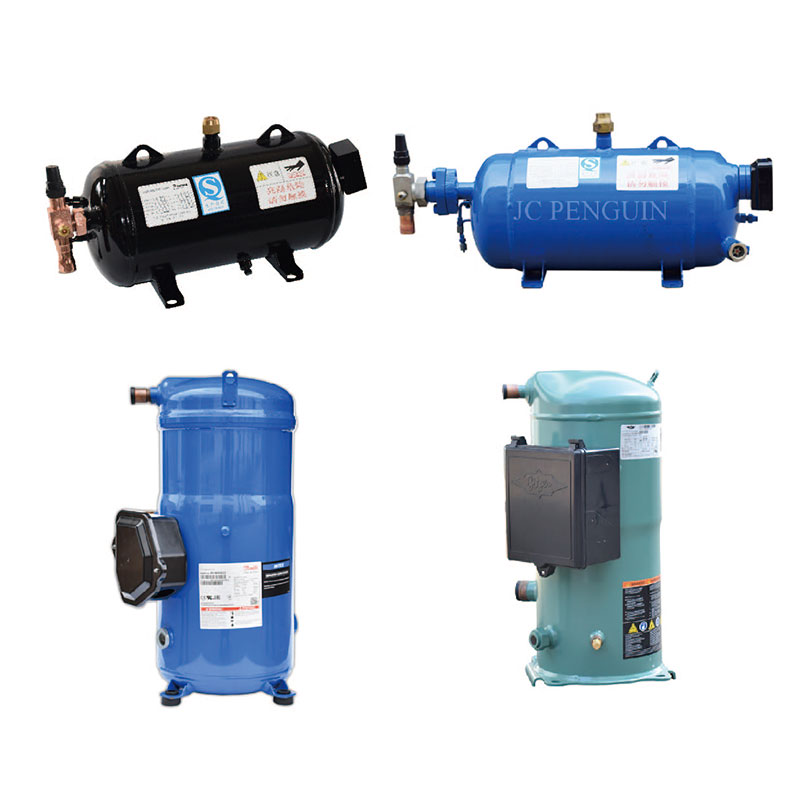
Supermarkets, cold storage facilities, and restaurant walk-ins demand absolute reliability. Food safety depends entirely on stable temperatures. In these environments, commercial refrigeration scroll compressors provide consistent load management. They prevent inventory spoilage effectively during peak operating hours. Multiple units often run parallel on large rack systems to handle dynamic display case loads.
You also must meet stringent urban noise ordinances. A quieter system improves the retail customer experience significantly. The inherent design reduces low-frequency hums common in older equipment. The business outcome is twofold. You achieve lower monthly utility draws while minimizing auditory disruption in densely populated commercial spaces. Your facilities remain compliant, efficient, and unobtrusive.
Manufacturing process cooling needs exact thermal control to maintain product quality. Data centers require uninterrupted thermal management to prevent server failure. Chemical processing relies on highly stable temperatures for safe reactions. Standard commercial gear often fails under these intense, continuous loads. In response, industrial refrigeration scroll compressors are frequently deployed in modern modular chiller systems. Facilities can sequence multiple units dynamically. This allows for highly scalable load matching as production demands shift.
Building a complete, resilient system requires thoughtful engineering. Incorporating an industrial refrigeration scroll compressor cooling unit allows for precise temperature staging. It builds vital redundancy into mission-critical production lines. If one circuit requires maintenance, the others continue cooling the process fluid. You achieve this robust reliability without requiring the massive footprint of singular screw compressors.
Rooftop units (RTUs), heat pumps, and complex split systems dominate commercial climate control. Seasonal changes bring unpredictable thermal loads to these systems. Liquid slugging occurs when unevaporated liquid refrigerant accidentally enters the compressor body. Liquid cannot be compressed. This event usually destroys traditional valves instantly.
Compliant scroll technology handles liquid slugging much better than legacy designs. The scroll components can physically separate slightly under extreme hydraulic pressure. They pass the liquid safely into the discharge line without shattering internal parts. This crucial flexibility protects the entire HVAC system from sudden seasonal weather shifts or temporary airflow restrictions.
Selecting the optimal equipment requires evaluating specific operational priorities. The following chart outlines how these distinct technologies compare across fundamental engineering metrics.
Operational Metric | Scroll Technology | Reciprocating (Piston) | Rotary Design |
|---|---|---|---|
Mechanical Complexity | Low (Few moving parts) | High (Valves, pistons) | Medium (Blades, rollers) |
Vibration & Noise | Very Low | High | Medium |
Partial Load Efficiency | Excellent | Moderate | Good |
Liquid Slugging Tolerance | High (Compliant design) | Very Low | Low |
Serviceability | Replace only (Hermetic) | Fully rebuildable | Replace only |
Reciprocating piston designs remain relevant in specific heavy-industry niches. They are best for high-pressure, heavy-duty industrial freezing applications. Many traditional refrigeration compressors in this category allow comprehensive field serviceability. Technicians can open the cast iron shell and rebuild them entirely. However, scroll units offer significantly smoother operation. They produce lower baseline vibration and achieve higher energy efficiency at partial loads. You sacrifice rebuildability to gain superior daily performance.
Rotary compressors operate differently. They are best for smaller, highly compact applications. Think of window AC units, RV air conditioners, or small freezers. Space constraint serves as the primary driver for this selection. When comparing them, scroll designs scale much better into larger commercial capacities. They offer more consistent volumetric efficiency over an extended 15-year lifespan.
Your shortlisting logic should follow a strict hierarchy. Choose scroll models when your primary priority is minimizing daily energy consumption. Select them to eliminate localized noise issues entirely. Rely on them to ensure high baseline reliability in the 1 to 15-ton capacity range per compressor circuit.
Every mechanical system carries inherent trade-offs. The hermetic seal trade-off remains the most prominent constraint. Because most scroll compressors are fully sealed inside a welded steel shell, catastrophic internal failures require full unit replacement. Component-level repair is physically impossible. Procurement teams must model these complete replacement costs against the anticipated savings from reduced routine maintenance. You avoid daily tinkering, but you face higher hardware costs during a critical failure.
Capacity ceilings dictate facility-level architecture. For massive, single-system industrial cooling loads, centrifugal or large screw machines may be structurally more appropriate. A single scroll unit caps out around 40 tons. Scroll technology is best utilized in a tandem or trio configuration for larger-scale needs. By piping two or three compressors together on a single circuit, you achieve high capacity alongside excellent stageable efficiency.
Refrigerant compliance demands immediate attention during the specification phase. International environmental regulations phase out high-GWP (Global Warming Potential) gases rapidly. Ensure the selected unit handles modern, low-GWP refrigerants like R-454B or R-32. This careful selection future-proofs your installation against evolving EPA mandates. Using outdated equipment limits your chemical options drastically.
Integration risks commonly stem from poor initial engineering. We frequently observe critical errors during the specification phase. Over-sizing a scroll compressor leads inevitably to short-cycling. The system turns on, cools the space rapidly, and shuts off prematurely. This degrades its primary benefit of continuous, efficient operation. It also prevents proper oil return, threatening mechanical integrity.
Calculate thermal loads precisely using ASHRAE standards before finalizing equipment size.
Install high-quality crankcase heaters to prevent refrigerant migration during off-cycles.
Integrate phase monitors to protect the three-phase motors from destructive reverse rotation.
Verify piping layouts to ensure adequate oil return velocities at minimum capacity stages.
Bypassing system pump-downs before servicing, leading to dangerous moisture intrusion.
Ignoring vibration isolation pads during rooftop installations, amplifying structural resonance.
Failing to flush old mineral oil when retrofitting an existing system for modern POE lubricants.
Oversizing the unit intentionally as a "safety factor," causing chronic short-cycling behavior.
Scroll compressors represent the optimal balance of energy efficiency, acoustic performance, and mechanical reliability. They dominate low-to-medium capacity commercial and industrial applications precisely because their simple geometry eliminates common failure points. While they require careful sizing and lack field rebuildability, their superior partial-load performance makes them invaluable for modern temperature control.
To move forward effectively, follow these actionable steps:
Audit your facility's current thermal load profiles and map daily fluctuations carefully.
Evaluate your operational tolerance for replace-versus-repair maintenance models.
Assess modular scaling opportunities using tandem configurations before releasing an RFP.
Verify all specified equipment matches your long-term refrigerant compliance roadmap.
Consult directly with a licensed HVAC/R systems engineer to perform a comprehensive lifecycle analysis. Compare tandem scroll configurations against traditional screw or reciprocating alternatives. Tailor this analysis specifically to your facility's unique operational constraints and acoustic requirements.
A: Generally, no. Most models are hermetically sealed inside a welded steel casing. Internal mechanical failure usually mandates a complete unit replacement rather than a component repair. This reality makes preventative maintenance, such as routine oil analysis and filter drier checks, absolutely essential.
A: Common causes include severe electrical fluctuations or phase reversal, which spins the scrolls backward. Loss of lubrication causes rapid friction failure. Severe liquid slugging beyond the compliant design's tolerances can shatter internal components. System contamination from moisture or debris also degrades the internal motor windings rapidly.
A: With proper initial installation, precise capacity sizing, and strict adherence to seasonal maintenance schedules, these units offer excellent longevity. An industry-standard lifecycle expectation for commercial and industrial applications is 12 to 15 years before mechanical efficiency drops significantly.
A: Yes. Compared to traditional reciprocating units, they boast up to 10-15% higher operational efficiency. This results directly from the absence of suction and discharge valves. Furthermore, the lack of clearance volume prevents gas re-expansion, ensuring continuous, highly efficient gas compression under varied loads.


